
Commercial Attic Insulation In Clear Lake
Commercial Attic Insulation In Clear Lake by Lone Star Air Duct Cleaning Services boosts comfort and efficiency with quality installs for local businesses
Table of Contents

Commercial Attic Insulation in Clear Lake, Texas
Commercial Attic Insulation in Clear Lake, Texas helps local businesses manage attic heat, indoor comfort, and overhead insulation conditions in buildings with attic space above occupied rooms. It can help offices, shops, clinics, restaurants, churches, schools, and light commercial buildings that deal with warm rooms, long HVAC run times, or uneven comfort from one area to another.
When Lone Star Air Duct Cleaning Services visits a Clear Lake property, you can expect a practical look at the attic, insulation depth, access points, ventilation, visible air gaps, and nearby ductwork. We explain what we see in plain language, then discuss work steps that fit your building and schedule.
Need Help? Call Lone Star Air Duct Cleaning Services near you
What commercial attic insulation does
Commercial attic insulation creates a thermal barrier between the attic and the occupied space below. In Clear Lake, that matters because attic heat can build fast, especially near large roof decks, flat roof sections, and older commercial buildings along NASA Parkway, Bay Area Boulevard, and El Camino Real.
Think of insulation as a buffer. It helps slow heat movement. In summer, it helps reduce attic heat pushing down into offices, dining rooms, exam rooms, storage areas, and customer spaces. In cooler months, it helps slow indoor heat loss through the ceiling.
This work is not a magic wand, but it can be a useful part of a better building envelope. It may also be reviewed along with Commercial Air Duct Testing in Clear Lake, Texas when comfort problems appear to involve both attic conditions and duct performance.
Commercial attic insulation can help with
- Warm ceiling areas
- Rooms that feel hotter near the end of the day
- HVAC systems that run longer during peak heat
- Attic spaces with thin, settled, or uneven insulation
- Older insulation that has shifted away from key areas
- Office additions that were never insulated well
- Tenant finish-outs where comfort needs have changed
The goal is simple. Help your building hold conditioned air better and reduce attic heat transfer where insulation can make a real difference.

Who uses this service in Clear Lake
Clear Lake has a mix of building types. Some are newer office spaces near Clear Lake City Boulevard. Some are older retail centers near NASA Road 1. Some are converted houses used as offices, clinics, or small service businesses. Each can have a different attic setup.
Lone Star Air Duct Cleaning Services works with commercial properties that may include small medical offices, professional offices, retail suites, daycare and learning centers, churches, meeting halls, restaurants, salons, fitness studios, light commercial spaces, property managed buildings, and mixed use buildings with attic access.
A common Clear Lake scenario is a business near Space Center Houston or the Johnson Space Center area where front offices feel fine in the morning, then get warm by midafternoon. Staff adjust the thermostat, the HVAC keeps running, and someone wonders why the back office always feels different.
Sometimes the answer is above the ceiling. Thin attic insulation, gaps around penetrations, or insulation pulled back from duct runs can all play a part. If duct condition is also a concern, Commercial Air Duct Maintenance in Clear Lake, Texas may be part of the larger conversation.
Why Clear Lake buildings often need attic insulation help
Clear Lake weather does not make attic work easy. Heat, humidity, salt air influence, and heavy rain seasons can affect building materials over time. Commercial roofs and attic areas take a beating from long sunny days, especially around open parking lots and low shade sites near the Gulf Freeway and Bay Area Boulevard.
Many local buildings have practical attic issues that build over time. Insulation can settle. Added wiring can disturb coverage. Old ceiling repairs can leave bare sections. HVAC work can move insulation away from duct areas. Moisture events, rodents, and remodels can also change how the attic performs.
Clear Lake also has many businesses in leased spaces. A tenant may not know what is above the ceiling until comfort complaints start. A manager may only notice the issue when employees bring small fans to work. That is usually the building asking for a closer look upstairs.
If the attic review shows duct concerns, the discussion may connect with Commercial Air Duct Repair in Clear Lake, Texas or Commercial Air Duct Replacement in Clear Lake, Texas when the building setup calls for it.
Need Help? Call us for Air Ducts, Dryer Vents and more!
Signs your commercial attic insulation may need attention
You do not need to climb into the attic to spot warning signs. Many clues show up during normal business hours.
- Rooms near exterior walls feel warmer
- Ceiling tiles or drywall feel warm to the touch
- Utility rooms or storage rooms hold heat
- Customers mention hot or stuffy spots
- Staff use desk fans even when the AC is on
- The HVAC runs longer than expected
- Some rooms cool faster than others
- Odors from the attic area seem to enter the space
- Insulation looks thin near attic access
- Past repairs left uneven insulation coverage
For a restaurant, the issue may show up in a dining area under a hot roof section. For a clinic, it may be exam rooms that are hard to keep steady. For an office near University of Houston Clear Lake, it may be a conference room that gets uncomfortable every afternoon.
Small clues matter. A warm ceiling tile may not tell the whole story, but it can help point the inspection in the right direction.
How a commercial insulation visit usually works
A commercial insulation visit should be organized and respectful of business hours. Lone Star Air Duct Cleaning Services keeps the process clear because no manager wants a guessing game in the middle of a workday.
- 1. Walk the space with your contact and ask where comfort issues show up
- 2. Locate attic access through a hatch, ladder entry, mechanical room, or ceiling panel
- 3. Check existing insulation for depth, coverage, gaps, settled areas, and disturbed sections
- 4. Review visible attic conditions such as ventilation, air openings, duct proximity, and areas that need care
- 5. Discuss access, parking, staging, business hours, and safety around employees or visitors
- 6. Explain next steps in direct language based on what was seen
Some attics are easy to inspect. Others are tight, hot, or split into several sections. Clear Lake commercial buildings can be quirky, and attic access can sometimes feel like a Texas sized surprise.
When duct layout appears to be part of the issue, Commercial Air Duct Installation in Clear Lake, Texas may also be discussed if the existing setup does not match the space well.
Insulation materials and attic conditions
Commercial attic insulation needs to match the building, the attic access, and the condition of the space. The material and method depend on what is already present and what the attic can accept.
- Blown in fiberglass
- Blown in cellulose
- Batt insulation in certain areas
- Spot correction where insulation is missing
- Insulation added over existing material when conditions allow
Blown in insulation is often used in attic spaces because it can cover broad areas and fit around framing. Batt insulation may fit better in limited sections, access areas, or certain framed cavities.
The right approach depends on the attic. A retail suite with open attic space may need a different plan than a small office with low roof clearance and several duct runs. The work should match the real building, not a one size fits all script.
How attic insulation works with air ducts
Attic insulation and air ducts often affect the same comfort complaints. Since the company works within Air Duct & Dryer Vent Cleaning Services, visible duct conditions matter during attic related work.
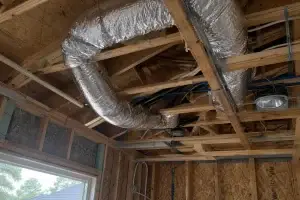
In many Clear Lake buildings, ducts run through hot attic areas. If insulation around the ceiling is thin and ducts are also exposed to attic heat, comfort can suffer. The AC may be working, yet the room below still feels warm.
During an attic review, visible issues may include ducts resting in disturbed insulation, duct runs blocking insulation coverage, gaps around ceiling penetrations, disconnected looking duct sections, dusty return areas near attic access, or dryer vent paths that need attention in mixed use spaces.
Attic insulation is not the same service as duct repair or cleaning. Still, the attic often tells a bigger story. When buildup inside ductwork is also a concern, Commercial Air Duct Cleaning in Clear Lake, Texas may be worth discussing.
Before insulation work begins
A little prep helps the workday go smoother. Commercial spaces have staff, customers, deliveries, alarms, locked rooms, and sometimes a ladder stored behind boxes of printer paper. Getting details in order helps.
- Confirm who has building access
- Clear the attic hatch or ceiling access
- Move fragile items below access points
- Tell staff which areas may be active
- Note rooms with comfort complaints
- Share recent roof, HVAC, or ceiling work
- Let the team know about security codes or restricted areas
- Provide parking or loading instructions if needed
If your building is near busy roads like Bay Area Boulevard or the Gulf Freeway, access timing can matter. Morning traffic, lunch rushes, school pickups, and delivery windows can all affect arrival and staging.
For customer facing businesses, work may need to happen before opening, after peak hours, or in phases. To talk through timing and access, use the Contact Us page and share basic building details.
What happens during installation
The exact steps depend on the attic and the scope of work. Most commercial attic insulation projects follow a careful sequence.
- Protect nearby work areas around entry points, floors, and occupied spaces
- Set up equipment based on access, parking, and building layout
- Prepare the attic by identifying areas that need care
- Install insulation across the target attic sections
- Check coverage for missed spots, thin areas, or blocked access needs
- Clean the work zone and leave the access area orderly
The work is not meant to disrupt the whole business. Still, insulation work can involve noise, equipment, and attic access. We explain what areas may be affected so your team is not caught off guard.
A short notice to staff can help. They will be working near the back hallway this morning is often enough. Simple and clear communication keeps the office rumor mill quiet.
Can attic insulation help hot offices and uneven rooms
It can help when attic heat transfer is part of the problem. Clear Lake buildings often have rooms that heat up faster because of sun exposure, roof shape, ceiling height, duct layout, or weak insulation coverage.
- Rooms under large roof sections
- Offices on the west or south side of a building
- Conference rooms with high occupancy
- Break rooms with heat from appliances
- Retail spaces with long open ceiling areas
- Older buildings with low insulation depth
Uneven comfort can have several causes. Insulation may be only part of the picture. HVAC sizing, duct layout, return air, thermostat location, windows, roof color, and air leaks can all matter.
A practical example is a small office near the Clear Lake medical area where the front desk is comfortable, but the manager office near the back wall gets hot after lunch. If the attic above that room has thin insulation, adding insulation may help. If the supply duct is also restricted, duct attention may be needed too.
How commercial spaces differ from homes
Commercial attic insulation is not always the same as home attic insulation. Businesses may have different access limits, fire rated assemblies, mechanical equipment, tenant rules, and work schedules.
- Multiple attic zones
- Drop ceilings below attic space
- More wiring and low voltage lines
- Roof mounted or attic related mechanical systems
- Larger open areas
- Shared walls between suites
- Property manager approval needs
- Occupancy concerns during work
Clear Lake has many strip centers and small office buildings where each tenant only controls part of the space. The attic may run across several suites, or access may be located in a neighboring unit. That can change planning.
A good plan respects the building, the occupants, and the workday. You can also review the broader Clear Lake, Texas service areas page for local coverage context.
Common Clear Lake building situations
| Building situation | What may be happening | What we look at |
|---|---|---|
| Office near NASA Parkway | Rooms warm up after midday sun | Attic coverage, duct areas, and ceiling gaps |
| Retail suite near I-45 | Customer area feels stuffy | Insulation depth and attic ventilation |
| Clinic near Bay Area Boulevard | Exam rooms vary in comfort | Coverage over each room and duct paths |
| Church or meeting hall | Large room is hard to cool | Open attic sections and ceiling coverage |
| Older converted office | Insulation is thin or uneven | Past remodel areas and access points |
These examples are not one size fits all. They are common patterns in the Clear Lake area. Every attic has its own personality. Some are neat. Some look like several contractors met there and never compared notes.
What can affect results and timing
Several factors can affect how the work goes and what results you notice after insulation is added. No two commercial buildings behave the same way.
- Existing insulation condition
- Amount of open attic space
- Ceiling air leaks
- Roof exposure and shade
- HVAC condition
- Duct location and condition
- Ventilation in the attic
- Moisture history
- Building age
- Window heat gain
- Room use and occupancy
Timing can vary. A small office with simple attic access may be more straightforward than a larger building with several attic sections. A tight attic, limited parking, busy customer hours, or shared tenant access can add coordination time.
Weather matters too. Clear Lake heat and humidity can affect how attic work is scheduled. Heavy rain can also change access plans, especially when equipment needs to be staged outside.
Does old insulation need removal
Not always. Existing insulation may remain in place if it is dry, stable, and suitable for adding more material. In other cases, damaged or contaminated areas may need attention before more insulation is installed.
- Moisture staining
- Rodent activity
- Mold like growth
- Heavy dust buildup
- Fire or smoke impact
- Compressed material
- Large bare areas
- Strong odors
Removal is a separate decision and should be based on attic conditions. If the existing insulation is simply thin but otherwise in workable condition, adding insulation may be considered. If it is damaged, covering it may not be the right move.
Air sealing and ventilation
Air sealing can play a role in attic performance. Insulation slows heat movement, while air sealing helps reduce air movement through gaps and openings. In commercial spaces, gaps may appear around ceiling penetrations, plumbing, wiring, light fixtures, attic hatches, and mechanical chases.
- Openings near pipes
- Gaps around duct boots
- Ceiling tile penetrations
- Attic hatch edges
- Wall chases
- Holes from past wiring work
Ventilation still matters. Commercial attic insulation should not block needed attic ventilation. Attention should be given to soffit vents where present, ridge or roof vents, gable vents, baffles, mechanical ventilation components, and clear paths for airflow.
Clear Lake humidity makes attic ventilation worth checking. Proper insulation placement should avoid blocking ventilation paths where airflow is needed.
Planning for property managers and multiple suites
Property managers in Clear Lake often deal with multi tenant buildings. A comfort issue in one suite may come from an attic condition above several spaces. Coordination can feel like herding cats, but it is manageable with a clear plan.
- Identify all attic access points
- Confirm which suites may be affected
- Notify tenants before inspection
- Share building rules before work
- Plan around high traffic business hours
- Keep access halls clear
- Assign one main contact for decisions
Multi suite buildings near El Camino Real, Space Center Boulevard, and Clear Lake City Boulevard often have shared attic runs. If insulation work crosses tenant boundaries, scheduling matters.
If dryer vent routing is part of a mixed use space, Commercial Dryer Vent Booster Fan Installation in Clear Lake, Texas may also be relevant to the building discussion.
Helpful details before scheduling
Before scheduling, it helps to gather basic building details. You do not need to have every answer, but these points can speed up the conversation.
- Building type
- Approximate attic access location
- Areas with comfort complaints
- Recent HVAC or roof work
- Known moisture issues
- Business hours
- Tenant or manager approval needs
- Parking and loading access
- Restricted areas
You can ask direct questions about the hottest rooms, customer impact, what to move before arrival, whether visible duct issues were seen, and whether work can be done in sections. Straight questions help create straight answers.
ZIP codes served around Clear Lake
Lone Star Air Duct Cleaning Services serves businesses in and near Clear Lake, Texas. Local ZIP codes may include 77058, 77059, 77062, 77598, 77586, 77565, 77573, and 77546.
Service needs can vary by building and exact location. If your business is near Clear Lake, Nassau Bay, Webster, Seabrook, League City, or the Bay Area corridor, the team can discuss whether your property is within the service area. You can also review general Service areas information.
Why work with the company
The team is based in Houston and works with businesses across the Clear Lake area. The company understands how attic insulation, duct conditions, dryer vent paths, and indoor comfort concerns can overlap in local commercial buildings. Learn more on the About Us page.
- Show up with respect for your business
- Look at attic conditions
- Explain what is found
- Discuss practical options
- Keep the work area organized
- Communicate before, during, and after the visit
Attic insulation should not be made mysterious. It is building work, and it should be explained in normal words. If your staff keeps saying it is always hot in that room, there may be a reason above the ceiling.
Related services in Clear Lake, Texas
- Commercial Air Duct Cleaning in Clear Lake, Texas
- Commercial Air Duct Installation in Clear Lake, Texas
- Commercial Air Duct Maintenance in Clear Lake, Texas
- Commercial Air Duct Repair in Clear Lake, Texas
- Commercial Air Duct Replacement in Clear Lake, Texas
- Commercial Air Duct Testing in Clear Lake, Texas
- Commercial Dryer Vent Booster Fan Installation in Clear Lake, Texas
- Commercial Attic Insulation
- Commercial Air Duct Cleaning
- Commercial Air Duct Maintenance
- Commercial Air Duct Repair
- Commercial Air Duct Replacement
Schedule commercial attic insulation in Clear Lake
If your Clear Lake business has warm rooms, thin attic insulation, or comfort issues that keep coming back, the team can help review the attic and plan the next step.
Call (830) 430-1849 to talk about your building, access needs, and scheduling options.
Frequently Asked Questions (FAQs)
It can support more consistent indoor comfort and help reduce strain on HVAC systems, especially during hot and humid seasons. Lone Star Air Duct Cleaning Services offers a range of services including Commercial Attic Insulation.
Common signs include uneven temperatures, HVAC running frequently, or noticeable heat buildup near ceilings. Lone Star Air Duct Cleaning Services offers a range of services including Commercial Attic Insulation.
It can be, since commercial spaces often have different roof structures, usage patterns, and building requirements. Lone Star Air Duct Cleaning Services offers a range of services including Commercial Attic Insulation.
Insulation can be part of an overall strategy that supports cleaner, more controlled indoor conditions, especially when combined with ventilation and maintenance. Lone Star Air Duct Cleaning Services offers a range of services including Commercial Attic Insulation.
Many types do, such as offices, retail spaces, medical buildings, and warehouses with attic or roof cavity areas. Lone Star Air Duct Cleaning Services offers a range of services including Commercial Attic Insulation.
Insulation may help with temperature stability, which can influence how humidity feels indoors, but moisture control typically also involves ventilation and building envelope considerations. Lone Star Air Duct Cleaning Services offers a range of services including Commercial Attic Insulation.
The level of disruption varies by building layout and access to the attic; many projects are planned to limit impact on daily operations. Lone Star Air Duct Cleaning Services offers a range of services including Commercial Attic Insulation.
Air sealing is often considered alongside insulation because gaps and penetrations can affect performance; an assessment can help identify priorities. Lone Star Air Duct Cleaning Services offers a range of services including Commercial Attic Insulation.
Heat, humidity, and storm seasons can influence insulation and ventilation needs, and building requirements may vary by property type. Lone Star Air Duct Cleaning Services offers a range of services including Commercial Attic Insulation.
Yes. Lone Star Air Duct Cleaning Services offers a range of services including Commercial Attic Insulation, and can also assist with related building comfort and HVAC-support services depending on your needs.

What Should Air Duct Maintenance Include for a Houston Home?
Routine air duct maintenance looks at the full path air takes through your home. It…
Air Duct Installation Planning for an HVAC Replacement or Home Addition
Plan new ductwork early when replacing HVAC equipment or adding space. Review each room, return-air…
What Is Duct Leakage Testing, and When Is It Worth Scheduling?
Duct leakage testing measures how much heated or cooled air escapes from ductwork. It can…