
Commercial Attic Insulation In La Porte
Commercial Attic Insulation In La Porte by Lone Star Air Duct Cleaning Services helps cut energy costs, improve comfort, and protect your building year round
Table of Contents
Commercial Attic Insulation in La Porte, Texas
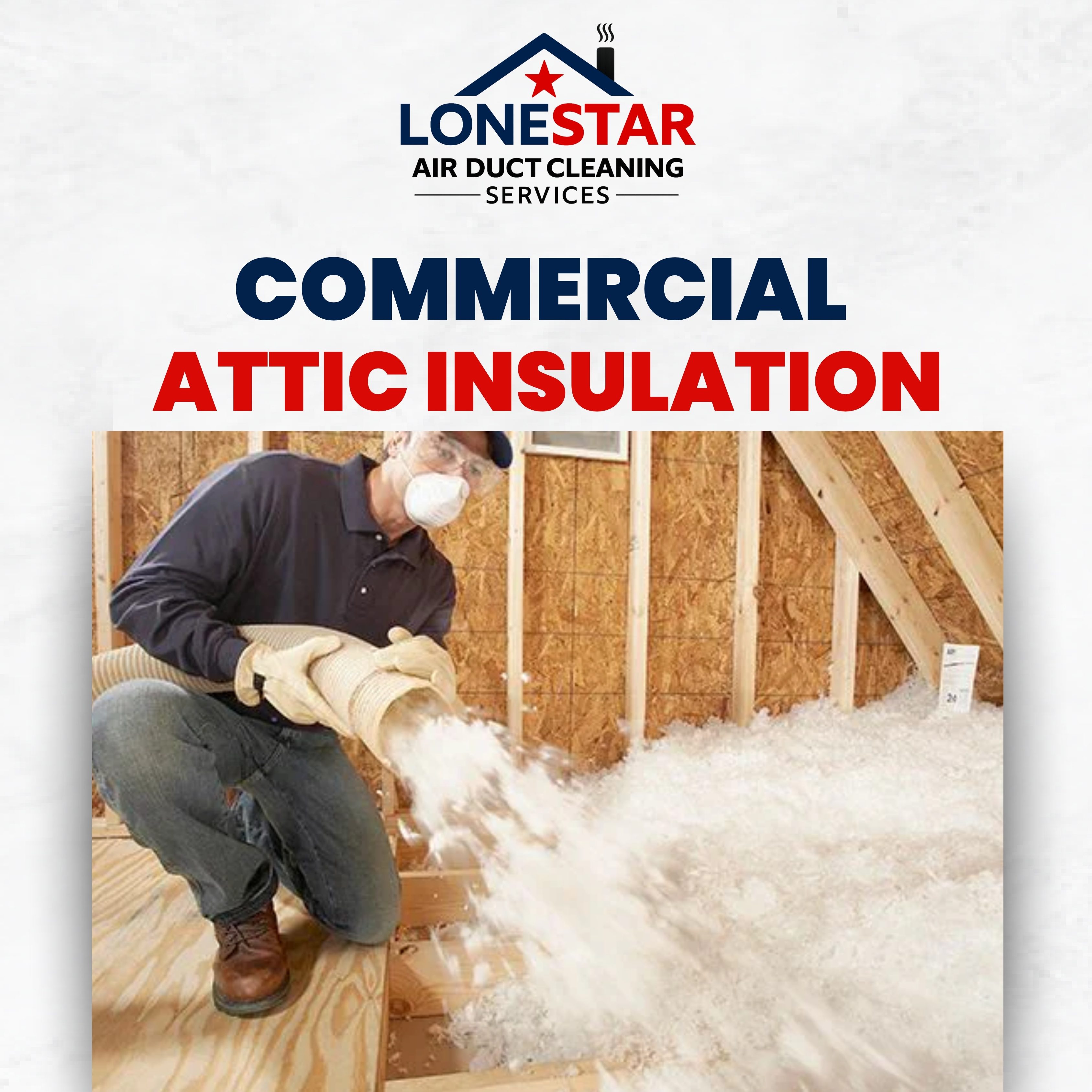
Commercial Attic Insulation in La Porte, Texas helps commercial buildings manage heat, reduce strain on HVAC equipment, and keep interior spaces more consistent through long Texas seasons. It can help offices, retail spaces, medical suites, warehouses, schools, churches, restaurants, and mixed use buildings with attic space above occupied areas.
When Lone Star Air Duct Cleaning Services visits your La Porte property, you can expect a practical look at attic access, current insulation, ventilation, air gaps, and building use. We explain what we see in plain language, then talk through options that fit the building without pressure or sales circus music.
Need Help? Call Lone Star Air Duct Cleaning Services near you
What commercial attic insulation does for a building
Commercial attic insulation slows heat transfer between the roof area and the rooms below. In La Porte, that matters because attic heat can build fast, especially near metal roofs, flat roof sections, and wide open ceiling spaces.
A commercial attic can affect office comfort during hot afternoons, HVAC run time, humidity control, break room temperatures, employee comfort, tenant complaints, dust movement through ceiling gaps, hot spots near exterior walls, and cold spots during winter fronts.
Many La Porte buildings were built in stages. A shop near Spencer Highway may have one section from the 1980s and another section added years later. A small office near Fairmont Parkway may have insulation over the front rooms but not enough over the back storage area. You can also review nearby coverage through La Porte, Texas service areas when planning work for multiple properties.
That patchwork can create uneven comfort. One room may feel fine up front while the back room feels like a toaster. Both complaints can be right. Commercial attic insulation helps even out those swings by creating a better thermal barrier above the ceiling.

Who uses commercial attic insulation in La Porte
La Porte has a mix of businesses, public buildings, service shops, and industrial support offices. Many of these properties have attic or overhead spaces that need attention after years of heat, moisture, roof work, or building changes.
- Small offices near Highway 146
- Retail spaces near Fairmont Parkway
- Medical and dental suites
- Daycare and learning centers
- Churches and fellowship halls
- Restaurants with attic space above dining areas
- Auto service offices
- Warehouses with finished office sections
- Property management buildings
- Break rooms inside light industrial spaces
- Older commercial buildings near Main Street
- Multi tenant properties near Underwood Road
Commercial attic insulation is not only for large buildings. A modest office with two AC units and a hard working front desk can still have attic problems. Sometimes the smallest attic causes the loudest complaints. Funny how that works.
Why La Porte weather makes attic insulation important
La Porte gets coastal heat, humidity, sudden storms, and salt air influence from nearby Galveston Bay. That mix can be rough on buildings. On a sunny afternoon, roof surfaces absorb heat and move that heat into attic spaces. If insulation is thin, missing, compressed, or disturbed, the rooms below can feel warmer than expected.
Local conditions that affect attic spaces include high summer heat, humid air from the bay, wind driven rain during storms, roof repairs after heavy weather, dust from busy road corridors, pollen, seasonal debris, moisture near attic penetrations, and long cooling seasons.
Buildings close to Sylvan Beach, Bay Forest Golf Course, Five Points, or the ship channel area may face different attic conditions than buildings farther inland. A property near the water may see more moisture movement. A building near traffic corridors may collect more dust. A warehouse office near industrial sites may have attic access points that were opened many times by different trades.
No two attics tell the same story. Some whisper. Some shout.
Need Help? Call us for Air Ducts, Dryer Vents and more!
Signs your commercial attic insulation needs attention
You do not need to crawl through the attic with a flashlight and a brave face. There are signs inside the building that can point to insulation problems.
- Rooms that heat up quickly after lunch
- Tenants adjusting thermostats often
- Ceiling tiles that show dust trails
- Uneven comfort between rooms
- HVAC systems running longer than usual
- Warm air near ceiling areas
- Musty odors after rain
- Insulation visible through ceiling gaps
- Drafts around recessed lights or attic hatches
- Complaints from staff near exterior walls
- Storage rooms that feel hotter than occupied rooms
- High humidity that seems hard to manage
A common La Porte situation starts with one simple complaint. The front office is fine, but two rooms near the back never cool down. Then we look above the ceiling and find insulation pushed aside near old wiring work, a loose attic hatch, or thin coverage near the roofline. It is not always dramatic. Sometimes the attic just needs practical correction.
Types of commercial attic insulation that may be used
The right insulation approach depends on the building, attic access, ceiling type, moisture conditions, and how the space is used. Commercial properties often need more planning than a typical home because access can be limited and business hours matter.
- Blown in fiberglass
- Blown in cellulose
- Batt insulation
- Air sealing around attic openings
- Insulation removal when needed
- Insulation touch up after trade work
- Attic hatch insulation
- Duct area insulation support
| Option | Where it may fit | Notes |
|---|---|---|
| Blown in insulation | Open attic areas over offices or retail space | Helps cover uneven areas and gaps |
| Batt insulation | Smaller attic sections or specific open framing areas | Works when spaces are clear and accessible |
| Air sealing support | Around penetrations, hatches, and gaps | Helps reduce air movement before adding insulation |
| Removal and replacement | Damaged or badly disturbed attic areas | Used when old material is no longer suitable |
Not every building needs every step. Some need added depth. Some need old material addressed first. Some need air gaps handled before new insulation goes in. The attic gets the final vote.
How the visit works
A commercial attic insulation visit in La Porte starts with listening. We ask how the building is used, where comfort issues show up, and whether there have been roof leaks, HVAC repairs, remodeling, or pest concerns.
- Walk through the building and review hot rooms, ceiling access points, mechanical areas, and comfort complaints
- Check attic access, ceiling height, hatch size, and safe working paths
- Inspect current insulation for thin areas, compression, gaps, moisture staining, debris, and disturbed sections
- Review ventilation and air movement around bypasses, chases, and openings
- Talk through findings in direct language without scare tactics or mystery jargon
- Plan the work around scheduling, prep needs, access, and reduced disruption for staff or tenants
If you are ready to discuss scheduling, use the Contact Us page and share what rooms feel uncomfortable, whether attic work has been done before, and what access is available.
How attic insulation can relate to HVAC performance
Commercial attic insulation can help reduce heat gain through the ceiling. That may help HVAC equipment operate under less strain, depending on the building and system condition. This is especially useful in La Porte buildings where air conditioning carries the load for much of the year.
If the attic is very hot and insulation is weak, ceiling heat can keep moving into occupied rooms. Attic insulation may support more stable room temperatures, less heat movement from attic space, reduced pressure on cooling cycles, better comfort near ceiling areas, and fewer hot spots in rooms below the attic.
Attic conditions often overlap with duct conditions. If ducts are running through a hot attic, the system may have a harder job. When dust, airflow, or comfort concerns also show up, Commercial Air Duct Cleaning in La Porte, Texas and Commercial Air Duct Maintenance in La Porte, Texas may be part of the conversation.
Attic insulation does not fix every HVAC issue. A weak system, blocked duct, poor duct layout, or humidity problem may still need separate attention. The goal is to improve the building envelope where attic conditions are part of the problem.
What if the building already has insulation
Existing insulation is common. The question is whether it is still doing its job. Insulation can lose effectiveness when it is compressed by storage or foot traffic, moved during electrical work, disturbed by HVAC repairs, damaged by moisture, contaminated by pests, thin in certain areas, missing near attic edges, or pulled away from access hatches.
Older commercial buildings near Main Street or older corridors off Highway 146 may have insulation from multiple eras. You might see batts in one area, blown in material in another, and bare spots where someone worked above the ceiling years ago.
That does not always mean the whole attic needs to be removed. Sometimes sections can be corrected. Sometimes removal is the cleaner path. We look at condition first, then explain what makes sense.
Air sealing before adding insulation
Air sealing helps close gaps where indoor air escapes into the attic or hot attic air pushes down into the building. It is not the same as insulation, but the two often work together.
- Attic hatches
- Plumbing penetrations
- Electrical openings
- Recessed light areas
- Chases above walls
- Gaps around duct boots
- Ceiling tile edges
- Soffit transition areas
- Open wall cavities
- Old access cuts
If air can move freely through gaps, insulation alone may not give the result you expect. It is a bit like wearing a jacket with the zipper wide open. The jacket helps, but the draft still wins.
When duct paths are part of the issue, Commercial Air Duct Testing in La Porte, Texas may help identify airflow concerns, while Commercial Air Duct Repair in La Porte, Texas may be discussed if damage or loose sections are found.
How commercial attics differ from residential attics
Commercial attic spaces often have more variables. A home attic may be fairly predictable. A commercial attic may include roof trusses, fire separations, duct runs, conduit, plumbing lines, ceiling grids, old mechanical equipment, and multiple access zones.
- Work around business hours
- Tenant coordination
- Larger attic areas
- Limited access points
- Drop ceilings
- Multiple HVAC systems
- Ducts crossing long spans
- Fire or smoke separation areas
- Storage above office sections
- Previous trade work in many locations
La Porte also has many buildings that support industrial, marine, logistics, retail, and service businesses. A front office attached to a shop may have a very different attic than a standalone office near a shopping strip. This is why a walk through matters. We do not assume your building matches the place down the street.
What a business can do before service
Good preparation helps the visit go smoother. Before attic insulation work, it helps to clear access to attic hatches, move items away from work areas, let staff know when workers may be present, identify rooms with comfort complaints, share roof leak history, mention past pest concerns, and point out recent HVAC, electrical, or ceiling work.
If the building has a drop ceiling, we may need access to ceiling panels. If it has a small hatch in a storage room, clearing boxes ahead of time can save delays. Nobody wants to start a project by playing find the attic door behind old holiday decorations and paper towels.
What can affect results and timing
Results and timing can vary by building. That is normal for commercial attic insulation in La Porte because building age, access, roof type, and current attic condition all matter.
- Attic size
- Existing insulation condition
- Moisture or staining
- Roof leak history
- Safe access
- Ceiling height
- Duct layout
- Electrical and plumbing obstacles
- Business hours
- Tenant access
- Weather
- Parking and loading space
- Need for removal before new insulation
- Air sealing needs
- Ventilation conditions
Some buildings can be handled with straightforward access and clear attic space. Others need more planning because of tight areas, old ceiling systems, or past repairs. La Porte storms can roll in fast, especially near the bay. If moisture is present in the attic, that concern should be understood before insulation work continues.
How insulation relates to indoor air and dust
Attic insulation and indoor air are connected through air movement. If an attic has gaps into the building, dust and attic particles can move through openings around lights, ceiling tiles, chases, and duct penetrations.
Commercial buildings with frequent door traffic, busy roads nearby, or older ceiling systems may already deal with dust. If attic bypasses exist, that dust problem can feel worse. Since Lone Star Air Duct Cleaning Services also works with air ducts, we look at the bigger picture when needed.
- Dust streaks around vents
- Dusty ceiling tiles near supply registers
- Dark lines near wall to ceiling joints
- Musty smells after hot attic conditions
- Particles around attic access doors
- Debris falling when ceiling panels move
Insulation is not a substitute for duct cleaning, and duct cleaning is not a substitute for insulation. Each service has a job. When the issue involves attic heat and air movement, looking at both can save confusion.
Local building types that often need attic insulation help
Small office buildings
Small offices often have low attic spaces and long cooling hours. A few thin attic areas can make certain rooms uncomfortable.
Retail spaces
Retail staff may notice hot spots near display windows, stock rooms, or checkout areas. Attic insulation can help reduce heat from above when attic gaps are part of the issue.
Churches and community buildings
Large gathering rooms can be hard to cool evenly. Attic insulation over offices, classrooms, and fellowship areas may help comfort during weekly use.
Medical and dental suites
Comfort matters when people are waiting, working, or receiving care. Attic heat above treatment rooms can make cooling less steady.
Restaurants and food service spaces
Kitchens already create heat. If the attic over dining or prep areas is under insulated, the building may feel harder to manage.
Warehouse offices
A warehouse may have a small finished office area inside a larger shell. These office attics often get overlooked, even though employees spend hours there.
Multi tenant buildings
Tenant comfort complaints may not come from the same cause in every suite. One attic section may be fine while another has missing or disturbed insulation.
What makes a La Porte attic inspection practical
A practical inspection does not turn into a lecture. It should answer plain questions about insulation depth, even coverage, moisture, disturbed material, visible air gaps, safe access, duct conditions, and roof or moisture clues.
We explain findings in normal language. If we see a thin area, we say that. If we see old material that needs closer review, we say that. If an HVAC issue seems more likely than insulation, we say that too. Clear beats clever.
Some buildings also need duct related support after attic findings are reviewed. If duct layout, aging materials, or damaged sections are involved, Commercial Air Duct Installation in La Porte, Texas or Commercial Air Duct Replacement in La Porte, Texas may be considered separately from insulation work.
Planning around business hours
Commercial work often needs planning around people. A quiet medical suite, a busy office, or a church with midweek events may need different scheduling. We talk through access times, occupied areas, tenant needs, noise concerns, parking, material staging, ceiling access, cleanup path, and safety around staff and visitors.
A property near Fairmont Parkway may need work outside heavy customer times. A warehouse office near Underwood Road may need coordination around delivery trucks. A church near Broadway Street may need rooms ready before evening meetings. The work plan should fit the building routine as much as possible.
ZIP codes served around La Porte
Lone Star Air Duct Cleaning Services serves commercial attic insulation needs in La Porte and nearby commercial corridors. Common ZIP codes in and around the La Porte area include 77571, 77572, 77536, 77505, 77507, and 77586.
If your building is near Sylvan Beach, Five Points, Lomax, Fairmont Park, Shoreacres, Deer Park, or the nearby Pasadena edge, we can discuss your location and service needs.
Why work with our team
Lone Star Air Duct Cleaning Services is based in the Houston area and works with commercial clients across nearby communities, including La Porte. Our background in air duct and dryer vent cleaning gives us a practical view of how attic conditions, duct systems, airflow, dust, and comfort concerns can connect. You can learn more about the company and team on the About Us page.
We focus on clear communication, clean work habits, and useful recommendations. We do not need to make the attic sound scarier than it is. Most building owners just want straight answers and a workable plan.
When we inspect a commercial attic, we look for real conditions that affect the space below. That includes insulation depth, gaps, disturbed material, access issues, moisture clues, and air movement. If the attic is not the main issue, we will tell you what we see. If insulation work makes sense, we explain the next steps.
When to schedule commercial attic insulation service
Good times to schedule include before peak summer heat, after roof repairs, after remodeling, when tenants report hot rooms, when utility use changes without a clear reason, after HVAC work in the attic, before leasing a commercial space, during building maintenance planning, after water intrusion has been corrected, and when attic insulation looks thin or uneven.
Many La Porte business owners call after the first stretch of hot weather. That is understandable. Once afternoon heat starts pushing through the ceiling, everyone notices. Still, attic insulation can be reviewed any time of year. A cooler month may make access easier, while warmer months can reveal comfort issues more clearly.
Businesses with laundry rooms, salons, fitness areas, or shared equipment spaces may also need to look at exhaust movement. When vent performance is part of the concern, Commercial Dryer Vent Booster Fan Installation in La Porte, Texas may be reviewed as a separate service.
What to ask before starting
Before moving forward, ask simple questions. What condition is the current insulation in. Are there signs of moisture. Are there air gaps that should be sealed. Will old material need removal. Can the work be staged around business hours. Are ducts part of the comfort issue. Are there areas that need special access. What prep should staff complete. How will cleanup be handled.
These questions help keep the project clear. They also help avoid surprises once attic work begins. A good rule of thumb is simple. If a ceiling area affects daily comfort, it deserves a look from above.
Related services in La Porte, Texas
- Commercial Attic Insulation in La Porte, Texas
- Commercial Air Duct Cleaning in La Porte, Texas
- Commercial Air Duct Installation in La Porte, Texas
- Commercial Air Duct Maintenance in La Porte, Texas
- Commercial Air Duct Repair in La Porte, Texas
- Commercial Air Duct Replacement in La Porte, Texas
- Commercial Air Duct Testing in La Porte, Texas
- Commercial Dryer Vent Booster Fan Installation in La Porte, Texas
- Commercial Attic Insulation
- Commercial Air Duct Cleaning
- Commercial Air Duct Installation
- Commercial Air Duct Maintenance
- Commercial Air Duct Repair
- Commercial Air Duct Replacement
- Commercial Air Duct Testing
Schedule commercial attic insulation in La Porte
If your La Porte building has hot rooms, uneven comfort, disturbed attic insulation, or attic conditions that need a closer look, schedule through the Contact Us page or call (830) 430-1849 to talk about commercial attic insulation and a service visit.
Frequently Asked Questions (FAQs)
Commercial attic insulation helps slow heat transfer between the attic and occupied spaces, which can support more stable indoor comfort and more consistent HVAC performance in La Porte’s hot, humid conditions.
Common signs include uneven temperatures, rooms that feel harder to cool, noticeable drafts near ceilings, or insulation that looks compressed, disturbed, or uneven during a visual check.
Many building types can benefit, including offices, retail spaces, warehouses with conditioned areas, medical and service facilities, and multi-tenant commercial properties.
Insulation can help reduce unwanted air movement from the attic into occupied areas, which may support cleaner indoor conditions when combined with good ventilation and maintenance practices.
Many projects consider air sealing or addressing obvious gaps and penetrations before or along with insulation, since uncontrolled airflow can reduce overall effectiveness.
Insulation can help reduce heat gain through the roof and ceiling, which may lessen how often HVAC equipment needs to run to maintain set temperatures.
It can be useful year-round by slowing heat transfer in both directions—helping reduce heat gain in warmer months and limiting heat loss during cooler periods.
Typically, a provider reviews access and safety considerations, performs a general assessment of the attic area, and discusses practical options based on the building’s conditions and goals.
Often yes, but the approach depends on accessibility, clearances, and safety. A contractor can recommend general best practices for working around equipment and pathways.
Lone Star Air Duct Cleaning Services offers a range of services in the area, including Commercial Attic Insulation, along with other related building comfort and maintenance services.
What Should Air Duct Maintenance Include for a Houston Home?
Routine air duct maintenance looks at the full path air takes through your home. It…
Air Duct Installation Planning for an HVAC Replacement or Home Addition
Plan new ductwork early when replacing HVAC equipment or adding space. Review each room, return-air…
What Is Duct Leakage Testing, and When Is It Worth Scheduling?
Duct leakage testing measures how much heated or cooled air escapes from ductwork. It can…