
Commercial Attic Insulation In Stafford
Commercial Attic Insulation In Stafford by Lone Star Air Duct Cleaning Services helps cut energy costs and improve comfort with expert installation and cleanup
Table of Contents
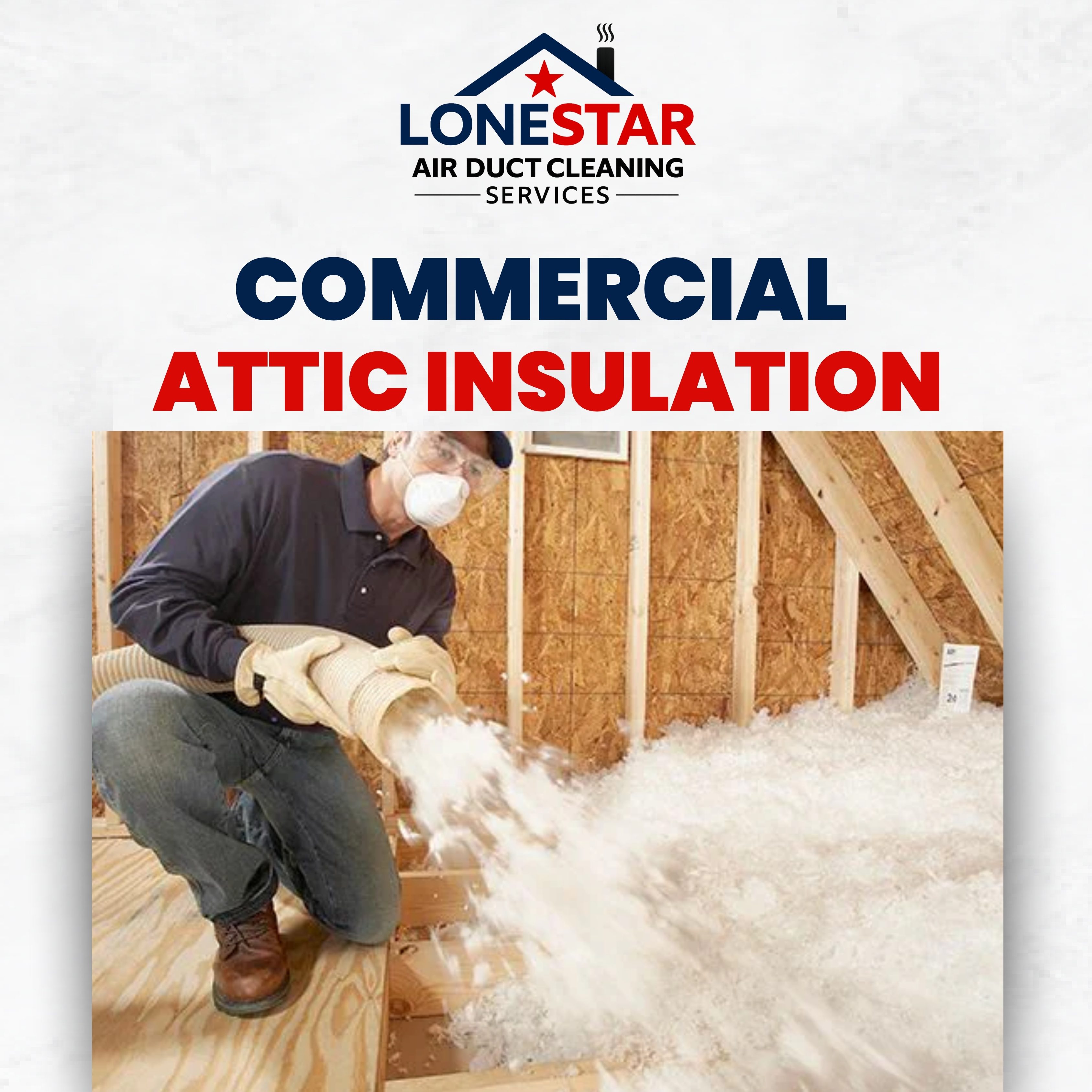
Commercial Attic Insulation in Stafford, Texas
Commercial attic insulation in Stafford helps business properties control heat movement above offices, retail spaces, warehouses, clinics, restaurants, and mixed use buildings. When the Texas attic turns hot, better insulation can help occupied areas feel more stable through the workday.
Lone Star Air Duct Cleaning Services inspects attic access, reviews current insulation, checks visible problem areas, and explains practical options for your building. Our team works from Houston, TX, and serves Stafford businesses with careful communication and cleanup that respects your schedule.
Need Help? Call Lone Star Air Duct Cleaning Services near you
What commercial attic insulation includes
Commercial attic insulation is material placed above a ceiling line to slow heat transfer between the attic and the rooms below. In Stafford, this matters because heat can build quickly above flat ceilings, office suites, break rooms, stock rooms, and customer areas.
- Attic access review
- Existing insulation check
- Air leak checks around ceiling openings
- Insulation depth review
- Material placement planning
- Work area protection
- Installation
- Final cleanup
Some buildings need new material added over existing insulation. Others need old, damaged, or disturbed material addressed first. A small office near Murphy Road may have simple attic access, while a larger property near the Southwest Freeway may have several attic pockets, duct runs, low clearance areas, and tight access points.
The goal is not to make the attic pretty. Most attics will never win a beauty contest. The goal is to improve the barrier between the hot attic and the occupied space below.

Who uses commercial attic insulation in Stafford
This service helps many Stafford property types, not only large buildings. It can support small offices, dental and medical suites, retail stores, daycare buildings, restaurants with attic space, churches, meeting halls, storage areas, and multi tenant commercial buildings.
A common call sounds simple. The lobby feels fine, but the back office gets hot by lunch. That can happen when insulation is thin, shifted, missing, compressed, or disturbed by past wiring, plumbing, roofing, or HVAC work.
Stafford buildings also often have additions. A front office may have one insulation type, while a rear build out has another. The two areas may feel very different, so a room by room discussion helps shape the plan.
Why Stafford commercial attics get so hot
Stafford sits in the Houston area, where heat and humidity are part of the package. The attic over a business can hold hot air for hours, especially during long summer afternoons. Buildings near US 90A, Dulles Avenue, Beltway 8, and I 69 may deal with heavy sun exposure, older roofing, and varied attic ventilation.
- Thin insulation
- Gaps around light fixtures
- Open chases above walls
- Unsealed attic access panels
- Duct leaks in attic space
- Insulation moved by past service work
- Compressed insulation near walk paths
- Missing insulation over small rooms
Humidity adds another wrinkle. Moist air can make indoor spaces feel sticky even when the thermostat setting looks reasonable. Nobody wants to hear that the conference room feels like soup. Commercial attic insulation can be one part of getting that space back under control.
Need Help? Call us for Air Ducts, Dryer Vents and more!
Signs that point to an attic insulation issue
You do not need to crawl into the attic to suspect a problem. Many clues show up inside the building first.
- Rooms that warm up faster than others
- Hot ceilings during the afternoon
- Staff using fans under supply vents
- Temperature swings between front and rear areas
- Dusty ceiling vents near attic spaces
- HVAC systems running longer than usual
- Break rooms or storage rooms that feel stuffy
- Complaints after lunch even when mornings feel fine
- Past roof leaks or ceiling stains
- Attic access areas that feel drafty
Older Stafford buildings may have insulation that has settled over time. Heat, dust, foot traffic, pests, and moisture exposure can reduce thickness or leave gaps. A business near Stafford Centre, The Fountains, or Main Street may notice that one area feels stable while another holds heat all afternoon.
How the attic inspection works
Lone Star Air Duct Cleaning Services starts with a practical look at the building. We want to understand how the space is used, where comfort concerns show up, and what areas need special care. You can learn more about our company and team through About Us.
- We talk through the problem areas
- We look at attic access points
- We check visible insulation coverage
- We look for obvious gaps or disturbed sections
- We note ducts, vents, wiring, and recessed fixtures
- We check for signs of moisture or old roof leaks
- We discuss the work path and cleanup needs
Commercial buildings can be tricky. Some have drop ceilings, some have hard lid ceilings, and some have small attic pockets over only part of the property. A restaurant may have hood systems and tight service spaces. A daycare may need planning around nap time, which is sacred ground.
Insulation options for commercial attics
Commercial attic insulation may use blown in insulation, batt insulation, or a mix based on access, attic shape, existing material, and building needs. Blown in insulation is common for broad attic areas because it can cover framing and fill wider spaces efficiently.
Batt insulation can fit certain framed areas, knee walls, small sections, or places where blanket material makes sense. It must be placed carefully because gaps, folds, and compression reduce performance. Some buildings need prep before new material goes in, especially when insulation is wet, contaminated, badly disturbed, or blocking ventilation paths.
We also look at areas that should not be covered. Some fixtures, equipment, vents, and access points need proper clearance. The just pile it everywhere approach can create headaches. Attic work needs care, not a snowstorm with a hose.
What happens during installation
The work plan depends on the building, but the process usually follows a clear path. First, work areas are protected where equipment, hoses, or bags may pass. Commercial spaces may have desks, shelving, display areas, waiting rooms, or hallways that need care.
Next, the attic area is prepared. This may include moving loose debris out of the way, noting areas to avoid, and checking access. If old insulation needs attention, that is discussed before work begins.
Then insulation is installed to the planned depth and coverage. The crew works through attic zones so coverage is more even. Attic walk areas, duct runs, low slopes, and corners need a careful eye. After installation, the access area and work path are cleaned so your property can get back to business.
| Planning point | Why it matters |
|---|---|
| Attic access | Access affects setup, timing, and work flow |
| Existing insulation | Condition helps guide whether material can be added |
| Building schedule | Work may need to fit opening hours, tenants, or quiet periods |
| Moisture history | Roof leaks or damp areas should be reviewed before adding insulation |
How air sealing supports attic insulation
Insulation slows heat movement, but air leaks can still move heat, dust, and humidity through gaps. Air sealing helps reduce those paths before or during insulation work when access allows.
- Plumbing penetrations
- Electrical openings
- Ceiling fixture gaps
- Chases above walls
- Attic access panels
- Open framing gaps
- Duct boot connections
- Gaps around dropped ceilings
Commercial spaces often have many ceiling penetrations, including lights, speakers, cameras, alarm wiring, vents, data lines, plumbing lines, and access panels. Each small gap may not look like much, but together they can act like a little attic highway.
Old insulation and attic dust
Old insulation does not always need removal. If it is dry, stable, and not blocking anything, adding material may be suitable. If it is wet, dirty, flattened, pest damaged, or mixed with debris, the building may need a different plan.
- Roof leak staining
- Damp insulation
- Rodent droppings
- Heavy dust buildup
- Mold like staining on surfaces
- Damaged vapor barriers
- Insulation blocking vents
- Bare areas over rooms
- Material pulled away from edges
Stafford buildings that have had roof repairs after storms may have attic sections that were never reset. A roofer, electrician, plumber, or HVAC technician may move insulation to work, then leave it uneven. Attics are tight, hot, and nobody goes up there for the scenery.
Office suite and retail comfort
Commercial attic insulation can help when attic heat is part of the problem. Many Stafford offices sit under vented attics. When insulation is thin or missing, heat can press through the ceiling and make the HVAC system work against a hot surface all afternoon.
Retail spaces also need customer areas to feel comfortable. If the sales floor, fitting rooms, stock areas, checkout counters, or staff offices feel warm, people notice quickly. Properties around The Fountains, Stafford Plaza, US 90A, and Dulles Avenue may have spaces that were remodeled many times, leaving insulation disturbed piece by piece.
Insulation is not a fix for every HVAC or building issue. Poor duct sizing, worn equipment, controls, and solar heat through glass can also affect comfort. Still, attic insulation is worth checking when the ceiling area is part of the heat load.
Pairing insulation with duct and dryer vent care
Lone Star Air Duct Cleaning Services also works in air duct and dryer vent cleaning services, so comfort is often reviewed from more than one angle. Attic insulation is part of the building shell, while ductwork is part of the air delivery system.
If ducts are in the attic, Commercial Air Duct Testing in Stafford, Texas can help identify concerns with air movement. If buildup is affecting vents or returns, Commercial Air Duct Cleaning in Stafford, Texas may also be part of the discussion.
Some properties need duct changes after attic work or remodeling. In those cases, Commercial Air Duct Repair in Stafford, Texas, Commercial Air Duct Replacement in Stafford, Texas, or Commercial Air Duct Installation in Stafford, Texas may be relevant to review.
For businesses that rely on laundry equipment, Commercial Dryer Vent Booster Fan Installation in Stafford, Texas may help with venting needs when the layout requires added airflow support. We do not assume every building needs every service. We look, explain what we see, and help you choose the next practical step.
What property managers should know
Property managers often need work that fits tenants, access rules, and building schedules. Commercial attic insulation should be planned with those details in mind.
- Tenant operating hours
- Attic access locations
- Areas with comfort complaints
- Known roof leak history
- Recent HVAC work
- Recent electrical or plumbing work
- Ceiling type
- Parking or loading access
- Alarm or locked area needs
- Preferred work windows
If the building has several tenants, each space may have a different issue. A salon may complain about heat from dryers and attic gain. A bookkeeper next door may feel fine all morning but hot by 3 p.m. A restaurant may have different needs because of kitchen heat and exhaust equipment.
What can affect results and timing
No two attics behave the same, even on the same street. Existing insulation condition, ventilation, roof color, roof age, air leaks, duct condition, HVAC performance, moisture history, pest damage, room layout, sun exposure, and building use can all affect results.
Timing can also vary. A clear attic over an office suite may move faster than a chopped up attic over several remodeled areas. Weather can affect attic heat and safe work pacing. Moisture concerns may need attention before insulation is added.
Some Stafford properties need work before opening, after closing, or during quieter hours. When scheduling is the next step, use Contact Us or call (830) 430-1849 so access, timing, and work areas can be discussed.
How to prepare a Stafford business
A little prep helps the day run better. You do not need to empty the whole building, but clear access makes a difference.
- Identify the attic access point
- Clear the area below access panels
- Move fragile items from the work path
- Let staff know which areas may be active
- Share alarm, key, or access rules
- Point out ceiling stains or past leak areas
- Note rooms with temperature complaints
- Make parking or loading areas available
- Keep sensitive equipment covered or moved if needed
If your business has customers on site, we can discuss ways to reduce disruption. Some work may still create sound and movement. Attic work is not silent, and anyone who says a blower machine is shy has not met one.
Common Stafford service area situations
Stafford has a mix of building types. You can go from an older office near US 90A to a newer commercial space near The Fountains, then to a light industrial property near Beltway 8. You can also review nearby coverage through Stafford, Texas service areas.
- Older commercial buildings with settled insulation
- Converted residential structures used as offices
- Retail strips with uneven attic coverage
- Warehouses with small conditioned office areas
- Medical suites with patient rooms under attic space
- Restaurants with hot kitchens and warm ceilings
- Churches and meeting spaces used at peak heat hours
- Multi tenant spaces with different comfort complaints
Areas around Stafford Centre, Murphy Road, Dulles Avenue, Cash Road, Brand Lane, and Greenbriar Drive often have buildings that have changed over time. Remodels can leave insulation patchy above new walls or ceiling sections.
Related services in Stafford, Texas
- Commercial Air Duct Cleaning in Stafford, Texas
- Commercial Air Duct Installation in Stafford, Texas
- Commercial Air Duct Maintenance in Stafford, Texas
- Commercial Air Duct Repair in Stafford, Texas
- Commercial Air Duct Replacement in Stafford, Texas
- Commercial Air Duct Testing in Stafford, Texas
- Commercial Dryer Vent Booster Fan Installation in Stafford, Texas
- Commercial Attic Insulation
- Commercial Air Duct Cleaning
- Commercial Air Duct Installation
- Commercial Air Duct Maintenance
- Commercial Air Duct Repair
Schedule commercial attic insulation in Stafford
If your Stafford business has hot rooms, uneven comfort, or attic insulation that has not been checked in years, Lone Star Air Duct Cleaning Services can help you take a closer look. Call (830) 430-1849 to schedule commercial attic insulation in Stafford, Texas.
Frequently Asked Questions (FAQs)
Commercial attic insulation helps reduce heat transfer between the roof space and occupied areas, which can support more consistent indoor comfort and more efficient HVAC operation in Stafford’s hot, humid climate.
Common signs include uneven temperatures, frequent HVAC cycling, noticeable heat gain from the ceiling, or older insulation that appears compressed or disturbed; an on-site evaluation can help confirm.
Many commercial properties use options like fiberglass, cellulose, or spray foam depending on the building design, access, and performance goals; a contractor can recommend a suitable approach.
Disruption varies by building layout and access points, but many projects can be planned to limit interference with daily operations by scheduling around business hours when possible.
Insulation can play a role in overall building performance, but moisture control typically also involves ventilation, air sealing, and addressing any roof or HVAC-related issues.
Air sealing is often considered alongside insulation because it can reduce air leakage that affects comfort and HVAC performance; a site assessment can determine what’s appropriate.
Requirements can vary based on building type and scope of work; it’s generally best to confirm local code expectations and any needed approvals before starting.
Many owners schedule periodic checks, especially after roof work, storms, or pest issues, to ensure insulation remains properly placed and in good condition.
Insulation may help indirectly by improving the building envelope, but indoor air concerns often involve multiple factors like duct condition, filtration, and ventilation.
Lone Star Air Duct Cleaning Services offers a range of services, including Commercial Attic Insulation, and can help you understand general options based on your property’s needs.
What Should Air Duct Maintenance Include for a Houston Home?
Routine air duct maintenance looks at the full path air takes through your home. It…
Air Duct Installation Planning for an HVAC Replacement or Home Addition
Plan new ductwork early when replacing HVAC equipment or adding space. Review each room, return-air…
What Is Duct Leakage Testing, and When Is It Worth Scheduling?
Duct leakage testing measures how much heated or cooled air escapes from ductwork. It can…