

If your dryer takes too long, start with the lint screen, load size, and outside vent flap. Lint buildup may call for cleaning, while damaged or disconnected vent sections may need repair. A poorly laid-out route may need a new installation. Extra cycles alone don't tell you which service to book.

Why warm clothes can still stay damp
Heat alone doesn't dry a load. Moist air also needs a clear path out of the dryer and home. When that path is restricted, the dryer can heat while clothes remain damp.
Whirlpool Product Help says persistent long dry times in a heating dryer are often tied to restricted home venting. It also advises a route that's as short and straight as possible because extra length and elbows reduce airflow. The useful question is what's restricting that path, rather than whether the dryer feels warm.
Know when to stop testing the dryer
Clothes that stay hot and damp deserve a professional inspection instead of more trial cycles. Stop using the dryer if you notice unusual heat or a burning smell. Don't run another load to see whether the problem goes away.
The U.S. Fire Administration identifies failure to clean as the leading ignition factor in home clothes dryer fires during 2018 to 2020. That finding doesn't diagnose your dryer, but it gives a clear reason not to ignore a possible restriction.
Make three simple checks before choosing a service
If there are no warning signs, these checks can help separate a basic laundry issue from a reason to arrange an inspection.
-
Lint screen Remove the lint and put the screen back in place. A clean screen doesn't tell you whether the rest of the vent is clear.
-
Load size Check the dryer's manual for loading guidance. If only large loads take extra cycles, try a smaller load before treating every slow cycle as a vent problem.
-
Outside flap From a safe ground-level position, look for the flap opening while the dryer runs. A flap that stays shut is a useful observation, but it doesn't identify the cause by itself.
Don't pull out a heavy dryer, loosen a gas connection, or climb onto the roof for these checks. Skip anything you can't reach safely.
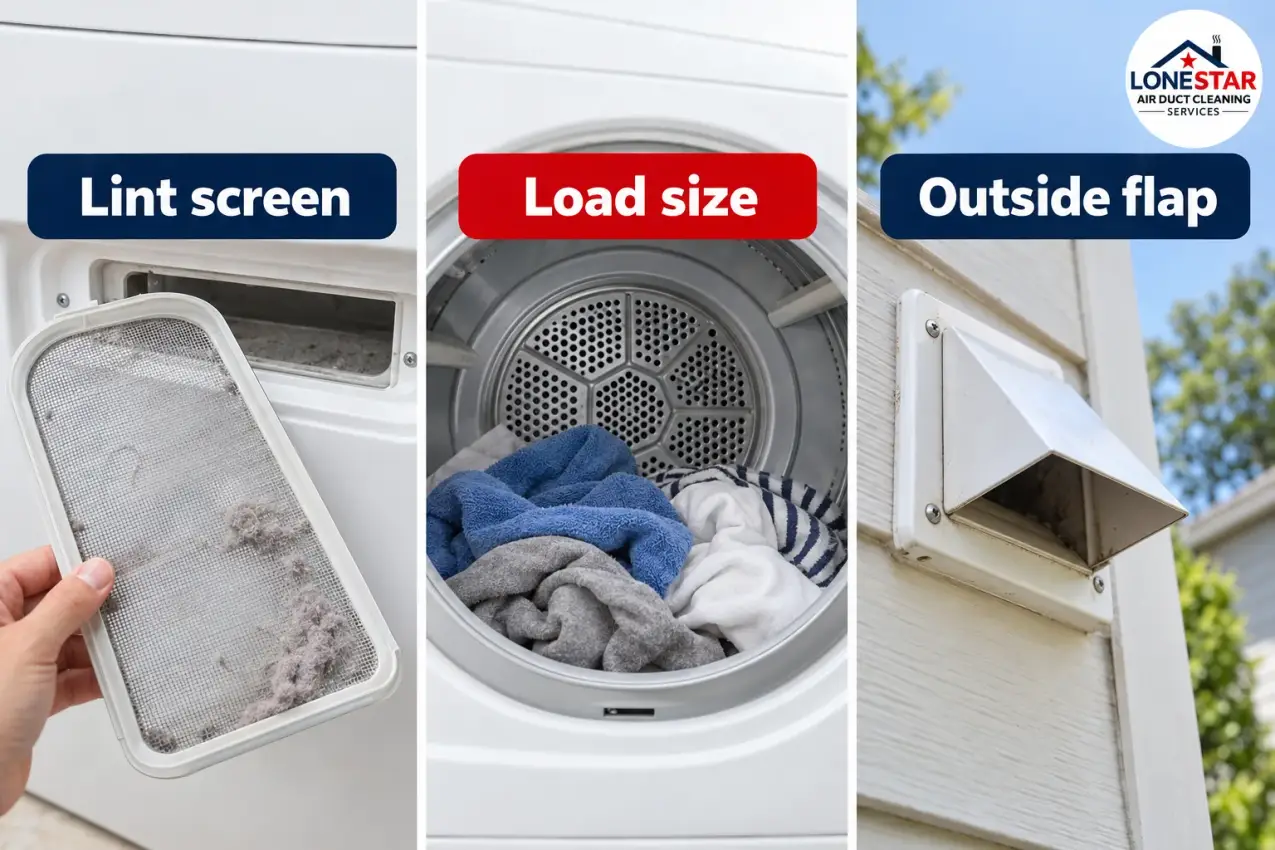
When your dryer takes too long, match the service to the finding
The service should follow an inspection of the vent's condition and layout. Cleaning, repair, and installation solve different problems, and some vents may need more than a single type of work.
Choose cleaning for lint buildup
Dryer vent cleaning is the relevant service when buildup restricts an otherwise usable exhaust path. It addresses material inside the vent rather than changing where the vent runs.
A clean lint screen doesn't rule out buildup farther along. Still, slow drying alone isn't proof that cleaning is the whole answer. The inspection needs to account for the vent beyond the screen, including its outlet. If damage is also present, removing lint won't resolve that separate defect.
Choose repair for damaged sections or connections
Dryer vent repair fits findings such as a crushed section, a damaged piece, or a disconnected joint. The goal is to restore the exhaust path, not simply remove lint from it.
Cleaning can't reconnect a loose joint or restore the shape of a crushed section. A repair decision should identify the affected part and explain why fixing that part is enough. If the broader layout is the problem, replacing a small section may leave the main restriction unchanged.
When a new vent route deserves a closer look
Dryer vent installation becomes relevant when the existing path is poorly laid out, unsafe, or has too many bends. This is a different decision from clearing a blockage or fixing a broken section.
Before agreeing to rerouting, the proposed work should explain what would change. That could include the path through the home, the number of bends, or the outdoor exit. A useful proposal connects those changes to the problem found during inspection.
Don't choose a new route from a sketch of the laundry room alone. The full run may include concealed sections. Its material, length, fittings, and outlet need review against the dryer's instructions and applicable local requirements. A shorter-looking option isn't enough to establish that a route is suitable.
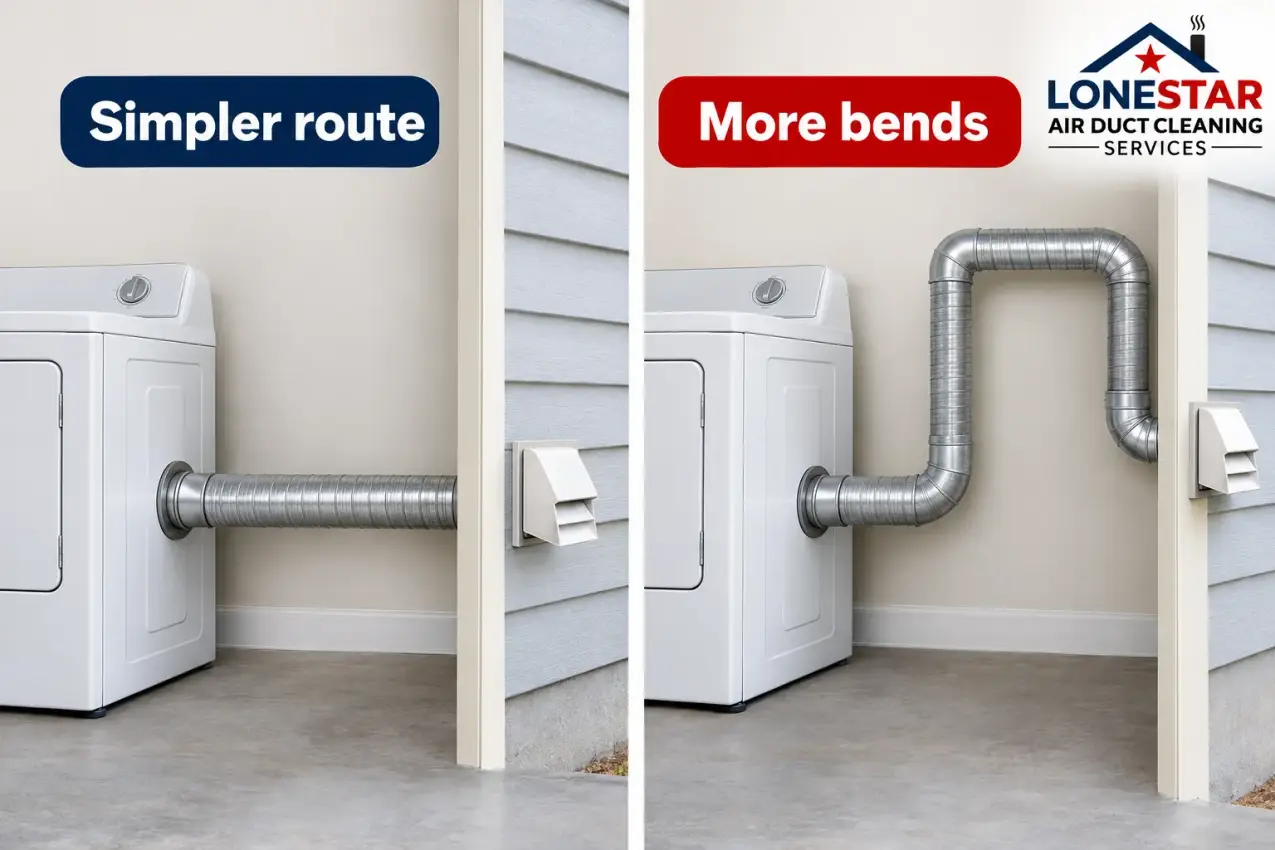
Prepare for the visit without taking the vent apart
Write down when the extra cycles began and whether the trouble affects most loads or only certain ones. Keep the dryer model number or manual handy. These details give the person inspecting it a clearer starting point than a request for cleaning alone.
Clear laundry baskets and stored items from the work area. Tell the scheduler about access limits, such as a tight laundry closet or a vent section you can't reach. You don't need to map a concealed duct yourself.
Before approving work, look for a plain explanation of the finding, the proposed fix, and any parts of the route that couldn't be checked. That keeps the decision tied to evidence rather than the symptom alone.
Common questions about slow drying
For dryer vent cleaning, repair, or installation in Houston, call Lone Star Air Duct Cleaning Services at (832) 430-1849. Describe the extra cycles and whether the vent exits through a wall, roof, or another path, then arrange an inspection to identify which service fits.