

Plan dryer vent cleaning once a year, and move it up if clothes start taking longer to dry or airflow seems restricted. Dryer vent cleaning frequency also depends on how much laundry you do and the vent's route. A yearly reminder is a starting point, not a reason to ignore changes between visits.

Put vent cleaning on your yearly calendar
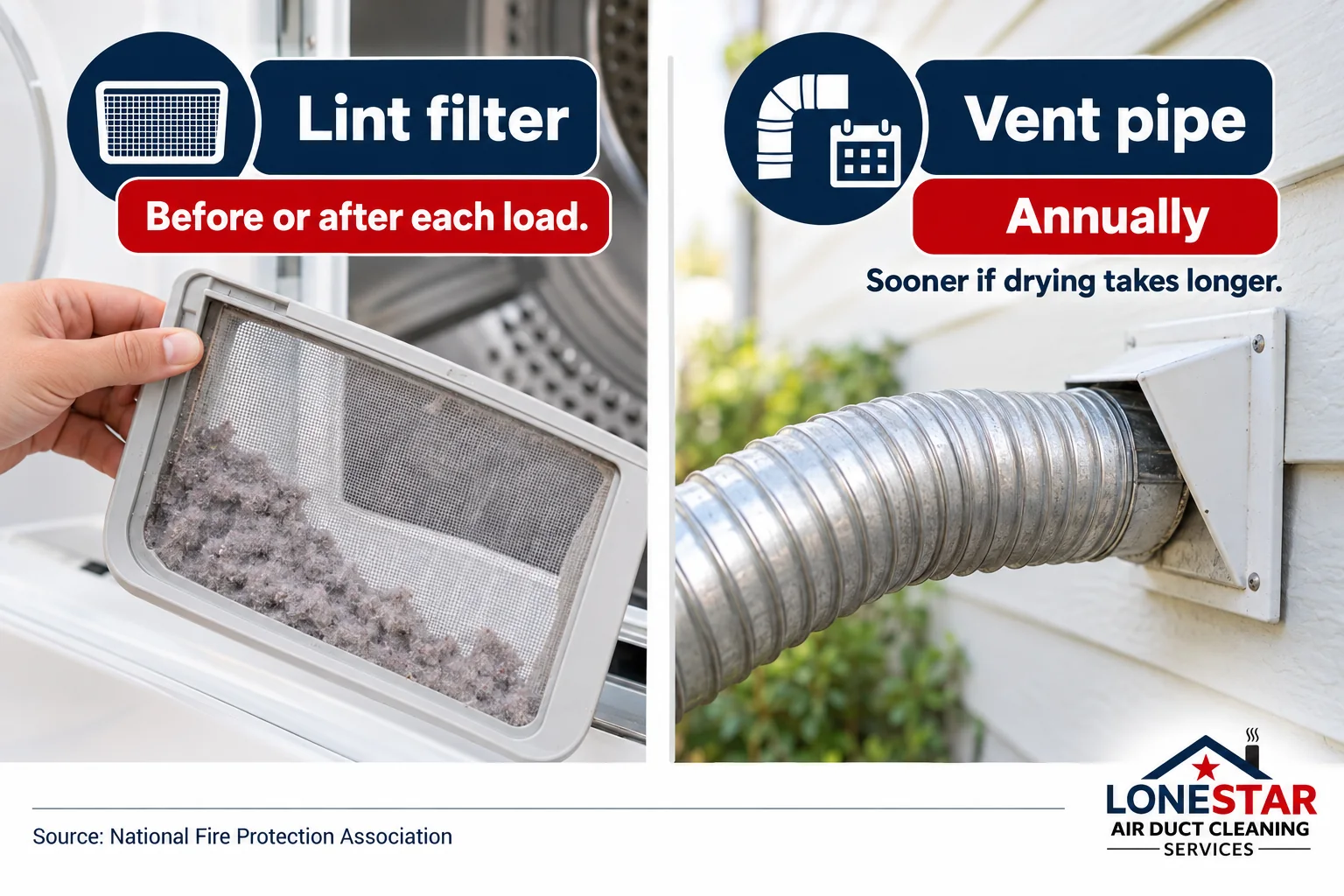
The National Fire Protection Association advises clearing lint from the vent pipe annually, or sooner if drying takes longer than normal. It also says to clean the lint filter before or after each load and keep the exhaust vent unrestricted.
Those are two separate tasks. Emptying the lint screen doesn't replace cleaning the pipe that carries exhaust outdoors. A clean screen alone doesn't tell you whether that pipe is clear.
Choose a month you'll remember and record the completed vent cleaning date. Set the next reminder from that date rather than guessing when the work was last done. If you recently moved in and don't know the vent's history, arrange a check instead of assuming the previous owner kept it clean.
What changes dryer vent cleaning frequency?
Homes don't all put the same demand on a dryer. Maytag's vent guidance identifies use frequency, load type, pet hair, and drying performance as factors that affect cleaning timing. It also calls for checking excess bends and other restrictions.
- Frequent laundry. A dryer used throughout the week may need attention sooner than a machine used less often. Think about actual loads, not household size alone.
- Lint-heavy loads and pet hair. The items you dry matter. Note whether your usual loads leave much more lint or hair in the screen.
- A long or winding vent route. A route with extra bends deserves closer attention. If you don't know where the pipe goes, include that question in the service visit.
These factors don't create a fixed six-month rule or another universal interval. Use them to plan an earlier assessment, then choose a schedule based on the vent's condition and your dryer's instructions.
Use these changes to decide when service shouldn't wait
Compare the dryer with its own normal performance. A change is more useful than comparing it with a neighbor's machine or a different load.
- Clothes take longer to dry. If a familiar load now needs extra time or another cycle, don't keep adding cycles as your only fix. Longer drying is a reason to check the exhaust path.
- The dryer runs unusually hot. Extra heat around the machine or in the laundry room can accompany restricted airflow. Heat alone doesn't prove there's a clog, but a clear change deserves attention.
- The exterior flap barely opens. If the outlet is safely visible from the ground, observe it during normal dryer use. Weak flap movement may point to poor exhaust flow. Don't climb onto a roof to inspect an outlet.
Describe what changed when arranging service. You don't need to name the cause. These observations help direct the check without turning a symptom into a diagnosis.
Look for restrictions beyond lint
A crushed connector, extra bends, or a clogged exterior hood can restrict airflow. Removing lint won't straighten a damaged pipe or change a winding route.
Look only at parts you can see without moving the dryer or opening the vent. Don't pull a heavy machine forward just to inspect behind it. If visible venting looks flattened or sharply bent, point it out during service so the check includes the pipe's shape, not only the lint inside.

Prepare for a useful cleaning visit
For Houston homeowners, Lone Star Air Duct Cleaning Services offers dryer vent cleaning that includes lint removal, airflow checks, and checks of exterior vent operation. That scope matters because the goal is a clear exhaust path, not simply a tidy lint screen.
Before the visit, gather a few details that make the setup easier to understand.
-
Have the dryer brand and model available, along with the manual if you have it.
-
Know whether the dryer uses gas or electricity. There's no need to disconnect it to find out.
-
Identify the exterior outlet if you already know its location. Say when you don't know.
-
Move laundry baskets and stored items out of the work area without moving the dryer itself.
After cleaning, base the next service date on what the vent check found. If the pipe needs repair or a different route, keep that work separate from the cleaning schedule. Booking more frequent cleanings isn't a substitute for correcting damaged venting.
Questions about dryer vent maintenance
For dryer vent cleaning in Houston, call Lone Star Air Duct Cleaning Services at (832) 430-1849. Share any changes you've noticed and arrange a visit to check the vent and plan your next cleaning.