Air Duct Testing in Fairfield, Texas

Book Air Duct Testing In Fairfield with Lone Star Air Duct Cleaning Services. Accurate testing, clear results, and cleaner indoor air for your home

Table of Contents
Professional Air Duct Testing in Houston

Air Duct Testing in Fairfield, Texas

Air Duct Testing in Fairfield, Texas is a practical way to check what is moving through your HVAC ductwork and how well the system is delivering air to each room. It helps homeowners, property managers, and business owners who want clearer answers about airflow, dust patterns, odors, or comfort issues.

When Lone Star Air Duct Cleaning Services comes out for testing, you can expect a straightforward visit. We look at your vents, returns, and air handler area, run targeted tests, and walk you through what we found in plain language. No mystery, no guesswork, just clear next steps.

Need Help? Call Lone Star Air Duct Cleaning Services near you

What is air duct testing really

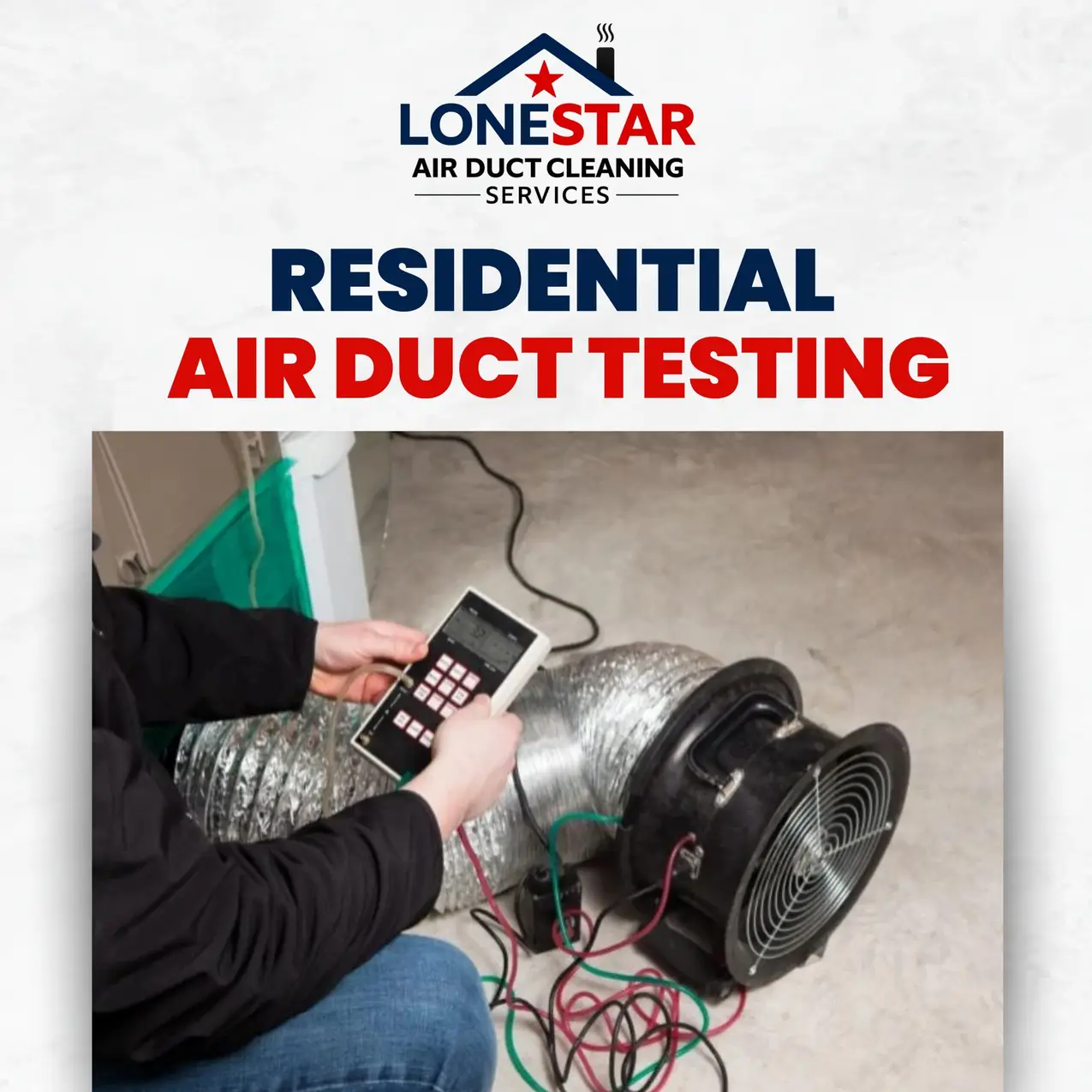
Air duct testing is a set of checks that tell you how your duct system is behaving. It is not the same thing as Air Duct Cleaning in Fairfield, Texas, and it is not always a full system repair visit. Think of it like checking the map before you start a road trip.

Depending on the situation, testing may include.

  • Airflow checks at supply vents and return grilles
  • Pressure checks to spot duct leakage or restrictions
  • Visual inspection of accessible duct sections, plenums, and boots
  • Basic indoor air concerns tied to ducts like dust movement and musty smells
  • Filter fit and return air pathways that can pull in attic or wall cavity dust

A quick real world moment we hear a lot in Fairfield goes like this.

Homeowner “The back bedroom is always stuffy.”

Us “Let’s see what the vent is actually delivering, and if the return path is doing its job.”

lone star air duct cleaning services logo

Who in Fairfield benefits from air duct testing

Fairfield has a mix of newer builds, established neighborhoods, and commercial spaces where HVAC runs hard through long summers. Ductwork can be routed through attics and tight chases, and small issues can show up as comfort problems fast. If you are comparing options across the region, you can also review Fairfield, Texas service areas.

Air duct testing is a good fit if you are.

  • A homeowner noticing uneven temperatures between rooms
  • A landlord getting repeated maintenance calls for no airflow complaints
  • A small business owner with hot and cold spots in offices or retail areas
  • A new homeowner who wants to know what they inherited behind the walls
  • Someone dealing with dust that shows up again right after cleaning surfaces

Common Fairfield scenarios we run into.

  • A living room that feels fine, while a bedroom near the end of the run barely moves air
  • A return grille that whistles when the system kicks on
  • A musty odor after a rain, especially when HVAC starts up
  • A remodel that changed wall layouts, and now airflow feels off

What should you expect during an appointment

We keep the process simple and respectful of your space. Most testing appointments follow a predictable path.

Step by step, here is how it usually goes

  • Quick chat about what you are noticing such as hot rooms, high dust, odors, noisy vents, allergy complaints, or high run time
  • Walkthrough of the system layout to locate supply vents, returns, thermostat placement, and HVAC equipment access
  • Testing and measurements at selected vents and returns, including clues that point to leakage, restrictions, or poor return air flow
  • Visual checks where access allows, including attic access, air handler closets, and visible boots and plenums
  • Clear recap of what we found, what it likely means, and what options you can consider next

We aim for a no alphabet soup explanation. If you want the technical detail, we can go there. If you just want the takeaway, we keep it plain.

What problems can air duct testing uncover

Testing helps separate it feels weird from here is what is happening. Duct issues are often a stack of small problems, not a single dramatic failure. If results point to a next step, it may be related to Air Duct Repair in Fairfield, Texas or Duct Balancing in Fairfield, Texas.

Here are common findings we see tied to duct behavior.

  • Low airflow at specific vents from crushed flex duct, kinks, or disconnected runs
  • Duct leakage that sends conditioned air into attic spaces instead of the room
  • Return air problems that cause rooms to feel stuffy when doors are closed
  • Dust being pulled from attic or wall cavities through gaps near returns
  • Poorly sealed boots at the ceiling or floor that allow air and particles to move around the edges
  • Filter fit issues that let air bypass the filter rack
  • Imbalanced airflow that makes one side of the home feel warmer or cooler

Sometimes the duct problem turns out to be something else, like an undersized return, a blocked coil, or supply registers that were closed for months and forgotten. Testing helps you avoid chasing the wrong rabbit.

Is air duct testing the same as an air quality test

Not exactly. Air duct testing focuses on the duct system and airflow performance. Indoor air testing can include sampling for airborne particles or other contaminants. They overlap in the sense that leaky or dirty duct pathways can affect what circulates indoors, but they are not identical services. For general background on indoor air, see https://en.wikipedia.org/wiki/Indoor_air_quality.

A simple way to think about it.

  • Air duct testing checks how air moves and where it may be leaking
  • Air quality testing checks what is in the air at the time of sampling

If your main issue is comfort, hot rooms, weak airflow, or a why is there so much dust mystery, duct testing is often the more direct starting point.

Need Help? Call us for Air Ducts, Dryer Vents and more!

What are the signs you might need air duct testing in Fairfield

Some signs are loud and obvious. Others are the slow drip kind that you only notice after living with it too long.

Look for patterns like these.

  • One or more rooms never feel right, even when the thermostat says everything is fine
  • You see dust collect quickly near supply vents or on nearby furniture
  • Odors appear when the HVAC starts, then fade
  • Vents are noisy, or you hear popping and rattling from duct runs
  • You feel low air movement at certain registers
  • The system seems to run a long time to reach set temperature
  • Allergy style symptoms flare more indoors than outdoors

If it walks like a duck and quacks like a duck, it is worth checking the duct path before blaming the thermostat for everything.

How does Fairfield weather affect duct performance

Fairfield sees long cooling seasons where HVAC systems cycle a lot. Heat, humidity, and attic conditions can put ductwork through a workout.

Local conditions that can influence duct behavior.

  • Hot attics that bake flex duct and stress connections over time
  • Humidity swings that can make musty odors more noticeable
  • Pollen seasons that make filtration and sealing more noticeable
  • Storms and wind that can stir attic dust, which can sneak in through gaps around returns or boots

Testing is useful because it checks the duct system as it is, not as it looked on installation day.

What does a return air problem look like in a typical home

Return air is the part of HVAC most people do not think about until it causes trouble. Supply vents push air out. Returns pull air back to the system to be cooled or heated again.

In many Fairfield homes, return placement and door positioning matter. A room can get plenty of supply air but still feel uncomfortable if the return pathway is restricted when the door is closed.

Common clues.

  • Bedroom feels stuffy only at night with the door shut
  • You feel a strong pressure change when a door closes
  • The return grille is loud when the system runs

During testing, we may check pressure differences and airflow behavior that point to return restrictions. It is often a small fix big difference situation, but we do not assume. We measure first.

What is duct leakage, and why does it matter

Duct leakage is when conditioned air escapes before it reaches the room, or when the system pulls in air from unwanted areas like an attic or wall cavity. For general background, see https://en.wikipedia.org/wiki/Duct_(HVAC).

It matters because.

  • Comfort suffers at the rooms farthest from the air handler
  • Dust can increase indoors if return side leaks pull in attic air
  • Humidity control can be harder if the system is not circulating as intended
  • The system may run longer to maintain temperature

A quick local example. If you are near a main road like I 45, you may already notice how fast dust can show up. A leaky return can make that wipe the shelf again cycle feel never ending.

How do you test airflow and balance across rooms

Airflow testing is about measuring what each vent is delivering and comparing it to what the home or space needs. Balance is the idea that rooms get an appropriate share of airflow, not that every vent blows exactly the same. When the next step is adjustment, Duct Balancing in Fairfield, Texas may be recommended.

We may look at.

  • Airflow readings at selected supplies
  • Temperature differences that suggest restriction or poor mixing
  • Register condition and whether dampers are open
  • Return airflow strength and pathway issues

Sometimes we find simple things.

  • A register damper was closed during painting and never reopened
  • A rug or furniture blocks a return
  • A flex duct in the attic got compressed near a truss

Other times it points to a bigger duct design limitation, especially in additions or converted spaces.

What about odors that seem tied to the vents

When someone in Fairfield says, It smells kind of like an old closet when the AC kicks on, we take that seriously, but we keep the approach practical.

Odors tied to HVAC can come from.

  • Moisture near the coil or drain system
  • Dust accumulation in duct runs or boots
  • Gaps pulling in attic air that smells like insulation, wood, or stored items
  • Negative pressure drawing odors from wall cavities or adjacent spaces

Testing helps identify whether the duct system is part of the path. Sometimes the solution is sealing, sometimes cleaning, sometimes addressing moisture management near the equipment. The right move depends on what we see. If buildup is a concern, Air Duct Cleaning in Fairfield, Texas can be one possible follow up.

Can air duct testing help with dust problems

It can, especially when dust is being moved by airflow patterns or pulled in through leaks. Testing helps answer two key questions.

  • Is air being delivered and returned correctly
  • Is air being pulled from places you do not want

Dust complaints often involve a mix of factors.

  • Filter type and fit
  • Return leaks near the air handler
  • Gaps around ceiling boots
  • Attic bypass points around returns
  • Household factors like pets, traffic in and out, and ongoing remodeling

We keep it grounded. If your home is near construction activity or you have a gravel drive, some dust is just part of life. Testing focuses on whether the HVAC system is adding to the problem.

What happens if you find an issue

If testing points to a specific problem, we explain the options you can consider. Sometimes it is a duct sealing need. Sometimes it is a disconnected run. Sometimes it points toward cleaning, or a separate HVAC repair item outside ductwork. In some cases, the right move may be Air Duct Maintenance in Fairfield, Texas or Air Duct Replacement in Fairfield, Texas if condition and access support it.

You will get.

  • A clear description of what we observed
  • Why it may be causing the symptom you reported
  • Reasonable next steps based on access and condition

We keep the tone honest. No scare talk. No your system is doomed speeches. Just the facts and a plan.

Air duct testing for commercial spaces in Fairfield

Small commercial spaces often have practical concerns.

  • Front office is comfortable, back room is warm
  • Breakroom smells travel through the vents
  • A supply vent rattles during peak cooling
  • A retail space has uneven airflow near the entrance

Commercial duct systems can also have longer runs, shared returns, or tenant buildouts that changed airflow paths. Testing helps sort out what is happening without guessing.

We work around business hours when possible and keep the visit efficient. If you are near central Fairfield corridors where foot traffic comes and goes, keeping indoor comfort steady can help your day run smoother.

How should you prepare for the visit

A little prep helps the testing go faster.

  • Make sure we can access the thermostat and main HVAC equipment
  • Clear light access to a few supply vents and at least one return grille
  • Let us know if any rooms are off limits or have special instructions
  • If you have attic access, make sure the hatch is reachable

If you have notes, share them. Even a quick list like master bedroom weak, hallway fine, odor after rain helps us focus.

Lone Star Air Duct Cleaning Services

What can affect testing results and timing

A few factors can shift what we can measure and how long it takes. No drama, just real life.

  • Outdoor temperature and humidity
  • System run time before arrival
  • Accessibility
  • Duct type and layout
  • Recent home changes
  • Filter condition

If you are right off a busy roadway or near open fields, airborne dust patterns can change seasonally. We account for that when we interpret what we see.

A quick what we test reference table

Testing areaWhat we are looking forWhat you might notice at home
Supply airflowWeak delivery, restrictions, closed dampersHot rooms, low air movement
Return pathwayPoor return flow, pressure issuesStuffy rooms, whistling doors
Leakage cluesAir escaping or being pulled inDust, attic smell, uneven comfort
Register and boot conditionGaps, loose connectionsDust halos around vents
Equipment area intakeFilter bypass, return leaksDust near unit, faster filter loading

Fairfield areas and ZIP codes we commonly serve

We work throughout Fairfield and nearby areas where homes and small businesses share similar HVAC setups and attic duct routing. ZIP codes we commonly see around Fairfield include 75840, 75831, 75844, 75859, 75860, 76664, 76626, and 75839.

If you are not sure whether your address fits, just ask. Fairfield is the focus for this page, and we often coordinate service based on the day’s route. You can also browse Service areas for a broader view.

Why choose Lone Star Air Duct Cleaning Services for testing

You want someone who can look at ductwork without turning it into a sales pitch. Lone Star Air Duct Cleaning Services approaches air duct testing in Fairfield with a simple goal. Figure out what is happening and explain it clearly.

What you can expect from us.

  • Practical testing focused on your specific complaint
  • Clear explanations without jargon overload
  • Respect for your home or workspace
  • A calm approach even when the attic is not exactly friendly

To learn more about the people behind the work, visit our About Us page.

Schedule air duct testing in Fairfield

If you are ready to stop guessing about airflow, dust, or vent related odors, schedule air duct testing in Fairfield with Lone Star Air Duct Cleaning Services. For scheduling, use our Contact Us page or call +18304301849.

Related services in Fairfield, Texas

Frequently Asked Questions (FAQs)

Air duct testing is a general assessment of your HVAC ductwork and air movement to help identify potential issues like airflow restrictions or possible contamination concerns. Many Fairfield homeowners request it when they want a clearer picture of indoor air quality and system performance.

It’s commonly considered after moving into a home, after renovations, when changing HVAC equipment, or if you notice persistent dust, uneven airflow, or musty odors. Lone Star Air Duct Cleaning Services offers a range of services, including Air Duct Testing, to help you evaluate next steps.

Testing may help identify whether duct airflow, duct routing, or potential leaks could be contributing to comfort differences between rooms. It’s a starting point for understanding what might be affecting distribution.

Air duct testing can be used to look for signs that leaks may be present and whether airflow appears inconsistent. If concerns are found, you can discuss practical options for further inspection or improvements.

It can help you understand whether the HVAC system and ductwork may be contributing to dust circulation, along with other factors like filtration habits and household activity. Results can guide whether cleaning, sealing, or maintenance should be considered.

Testing may indicate conditions that can be associated with moisture or air quality concerns, but confirming mold typically requires additional evaluation. If you’re concerned, it’s best to ask what assessment approach is appropriate for your situation.

The time can vary based on home size, duct layout, accessibility, and what you want assessed. A provider can give a general expectation after learning about your home and HVAC setup.

It’s generally helpful to ensure the HVAC equipment and vents are accessible and that pets are secured. If you have specific comfort or air quality concerns, noting where and when you notice them can also help.

Not necessarily. Testing results are typically used to inform whether cleaning, sealing, filter changes, or other HVAC maintenance might be worth considering, depending on what’s observed.

Lone Star Air Duct Cleaning Services offers a range of services including Air Duct Testing, and they can also discuss related options that may support airflow and indoor air quality goals based on your needs.

Common Causes of Air Duct Leaks in Older Homes

Common Causes of Air Duct Leaks in Older Homes

Air duct leaks in older homes often start with age. Metal joints loosen, tape dries…

Air Duct Cleaning and Indoor Dust, What Homeowners Should Know

Air Duct Cleaning and Indoor Dust, What Homeowners Should Know

If dust keeps showing up on your floors, shelves, and vents right after you clean,…

How Clogged Dryer Vents Raise Fire Risk at Home

How Clogged Dryer Vents Raise Fire Risk at Home

Clogged dryer vents raise fire risk because lint blocks airflow and traps heat inside the…